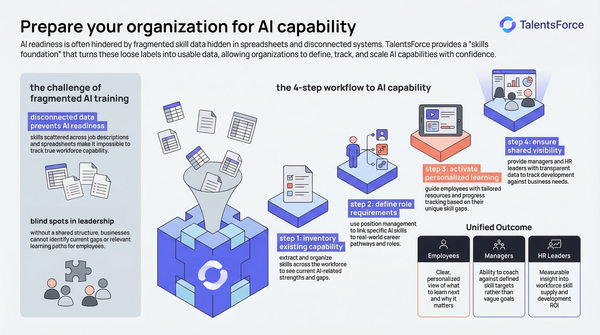
Prepare employees for AI skills through personalized learning and shared progress tracking
Prepare employees for AI skills with personalized learning, role-based skill requirements, and shared progress tracking for managers and HR leaders.

Prepare employees for AI skills with personalized learning, role-based skill requirements, and shared progress tracking for managers and HR leaders.
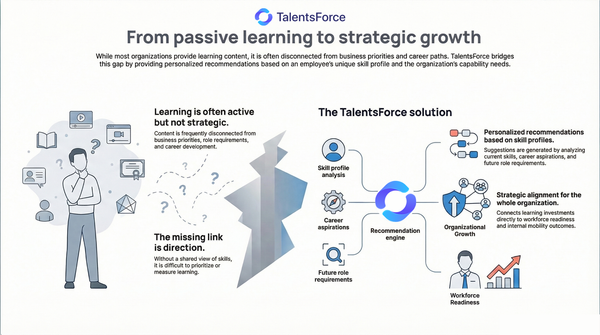
💡1. A meaningful share of workforce skills is now changing within a 3–5 year window, and AI is making that cycle even shorter for many roles. 2. Continuous learning builds adaptability, improves retention and internal mobility, strengthens the leadership pipeline, and makes the business more capable of absorbing change
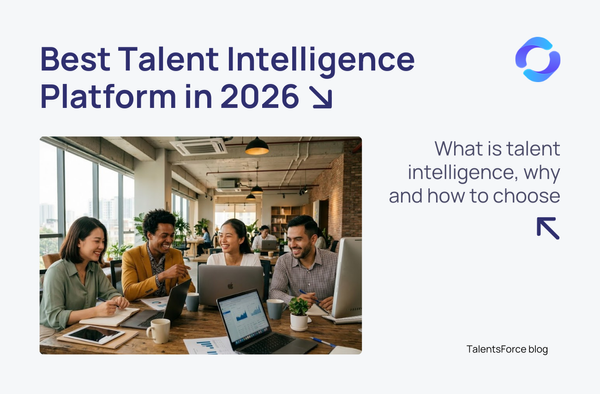
Compare the best talent intelligence platforms for 2026, including TalentsForce, Eightfold AI, Gloat, Phenom, Beamery, and Fuel50 for skills-first hiring, mobility, workforce analytics, and AI.
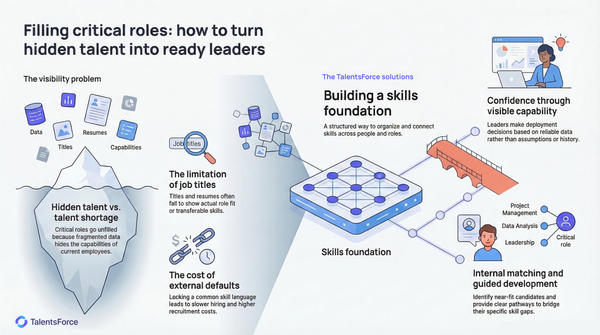
Prepare your organization for future critical role vacancies by building your internal capability to fill them now for tomorrow.
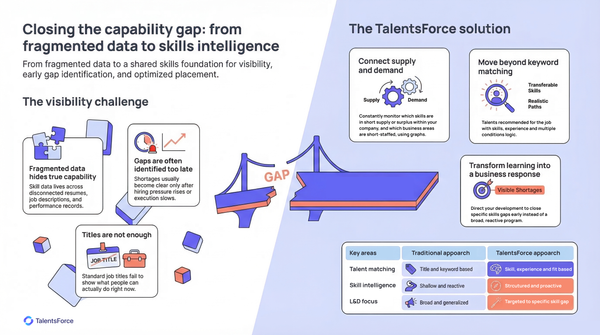
TalentsForce helps organizations identify skills gaps earlier by comparing skill demand and workforce supply in one view, so learning and workforce planning teams can act with more confidence.

Talent mobility includes more than promotion. Learn the 7 main types of talent mobility, what each one signals, and why they matter in workforce planning.
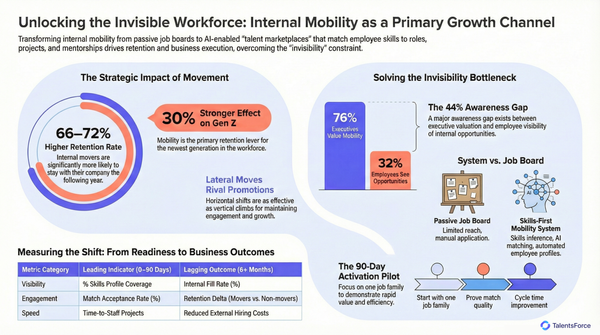
💡What’s in this article: 1. Internal mobility is a repeatable way to assemble the right capability fast, without waiting on external hiring cycles. 2. It improves execution speed, innovation throughput, and growth economics when skills are visible and opportunities are transparent. 3. Most programs stall because skills data exists
en
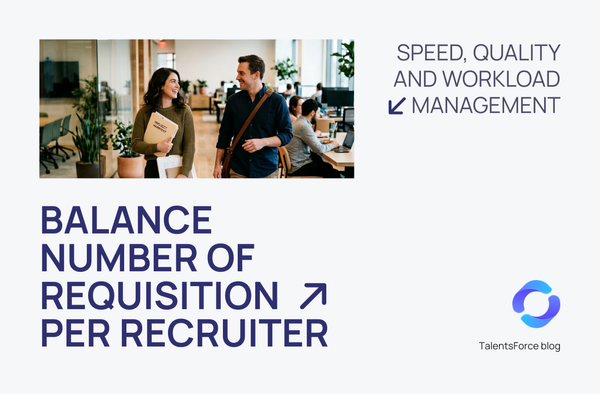
The number of requisitions a recruiter handles can greatly impact the quality and efficiency of the hiring process. But how many are too many?
Skills duplication and inconsistent definitions break trust in workforce data. Learn how a Talent Intelligence Platform unifies skills to drive action across HR workflows.
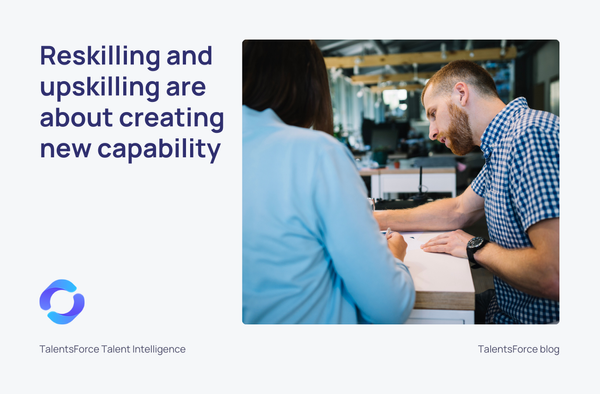
This piece is a practical view of how to make reskilling and upskilling create business impact, instead of creating the feeling that “we’re doing the right thing.”
💡What you need to know: 1. The problem from interview questions drifts off-course between different interviews. 2. Interviewer mood dramatically affects how deeply they explore vs. how quickly they wrap up 3. Meta-analysis: structured interviews show 0.42 validity for predicting performance, higher than any other selection method 4. Consistency
💡What we cover in this article 1. Recruiting teams are managing more work with fewer people. 2. We explore why workload is increasing, where the biggest efficiency opportunities exist, and how technology helps teams maintain hiring momentum without adding headcount. Recruiting teams have 24 people on average now, down from