


2. Continuous learning builds adaptability, improves retention and internal mobility, strengthens the leadership pipeline, and makes the business more capable of absorbing change without falling behind.
Continuous learning often breaks down not because employees do not want to grow, but because they do not know what to learn next, why it matters, or how it connects to their role and future opportunities.
Many organizations already provide learning content. The real challenge is direction.
TalentsForce helps solve this by connecting learning recommendations to skills, career goals, and organizational needs. Instead of offering generic training options, the platform recommends learning based on each employee’s current skill profile, target role, and development path.
The challenge
In many companies, learning exists in a separate workflow from talent decisions.
HR may have learning systems. Managers may want to support development. Employees may be willing to improve. But without a shared view of skills, it becomes difficult to answer simple but important questions:
- What skills does this employee already have?
- What are they missing for the next role?
- What learning should happen now?
- How does that learning support workforce readiness?
When those answers are unclear, learning becomes hard to prioritize and even harder to measure. Employees receive content, but not clear direction. Managers support growth, but without enough visibility. HR invests in development, but struggles to tie learning back to capability building or mobility outcomes.
What TalentsForce enables
TalentsForce turns learning into a more structured, skills-based process.
With Learning Recommendations, the platform generates personalized development suggestions based on each employee’s skills, career aspirations, and the requirements of future roles. Employees can see what to learn next, why it matters, and how that learning supports their growth.
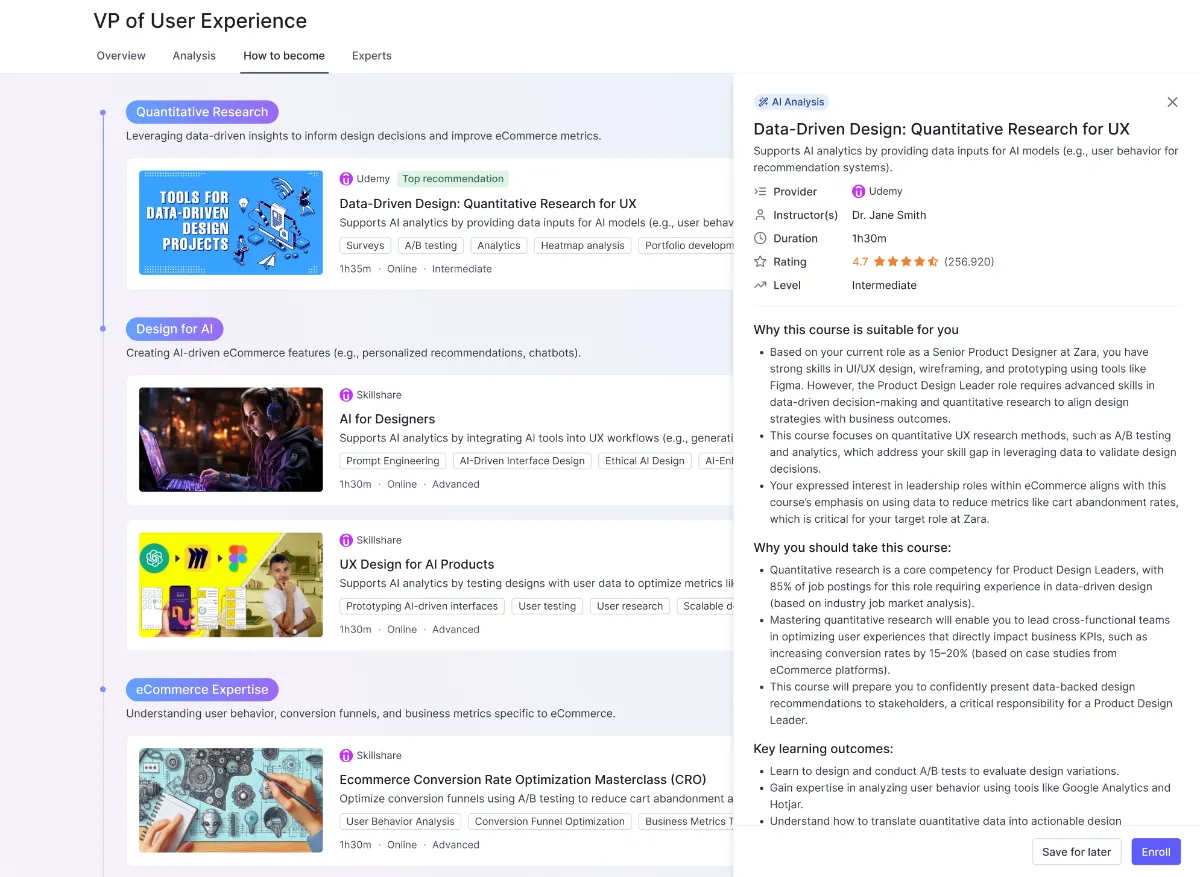
This creates a clearer path from skill gap to learning action.
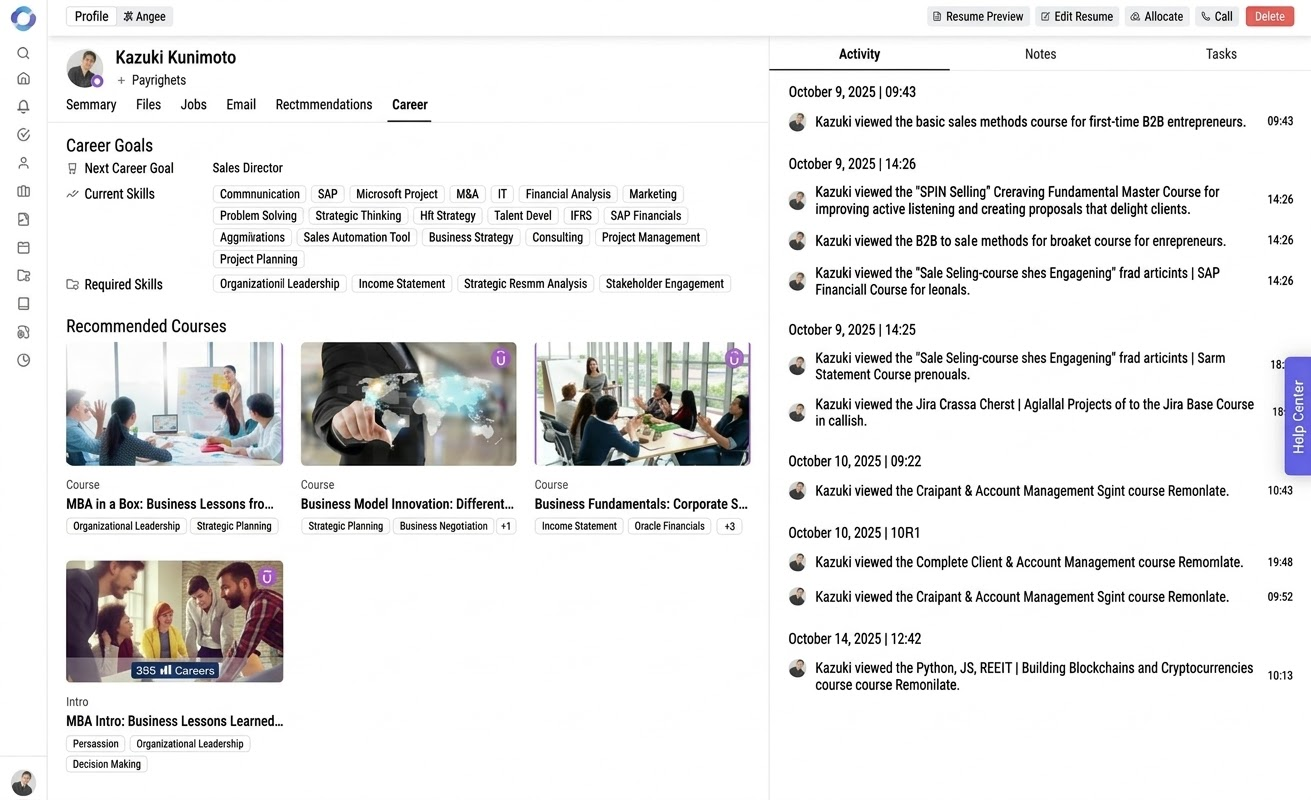
Rather than treating learning as a library of disconnected content, TalentsForce helps the organization guide each employee toward relevant skill development. The recommendation is not based only on content availability. It is based on capability needs.
Why it matters
This changes learning from a passive experience into a practical development workflow.
For employees, it creates clarity. They can better understand their current position, the skills they need to build, and the steps that move them forward.
For managers, it improves coaching and development conversations. They can support learning with more confidence because recommendations are linked to skill requirements and growth paths, not just broad suggestions.
For HR and L&D leaders, it creates better alignment between learning investment and workforce needs. Development becomes easier to connect to capability building, internal mobility, and long-term talent readiness.
Business impact
TalentsForce helps organizations make continuous learning more relevant, more targeted, and more actionable.
- Instead of simply offering training, the organization can guide people toward the skills that matter most.
- Employees gain a clearer learning path.
- Managers gain better visibility into development needs.
- HR gains a stronger way to connect learning to talent strategy.
The result is a learning approach that does more than deliver content. It helps build the capabilities the business needs next.