


Business priorities shift. A new competency becomes critical. A team needs to prepare for a change in work. These business changes create a gap between competency requirements and the current state of the workforce.
But this gap only becomes apparent after implementation slows down; development begins after the business has felt the shortage, recruitment pressure increases, or training costs fail to improve readiness.
In today's business environment, any delay comes at a cost in money and time, profoundly impacting a business's competitive advantage.
The challenge
Most organizations do not hold skill demand and skill supply in one consistent view.
Demand often sits in role definitions, job descriptions, business plans, or manager requests. Supply sits across resumes, employee profiles, performance records, and learning history. These records live in different systems, use different languages, and do not create a clear view of workforce capability.
Because of that, L&D and workforce leaders struggle to answer simple but important questions early enough:
- Which skills are rising in demand?
- Where are the real shortages? Which teams are most exposed?
- Which employees are near-fit and can close the gap with targeted learning instead of external hiring?
That is where the workflow breaks. The business needs action, but the organization cannot see the gap clearly enough to act with confidence.
What TalentsForce makes possible
TalentsForce creates a skills foundation, meaning a structured and consistent way to define, organize, and connect skills across roles, people, and systems. That foundation matters because a skills gap is not just a learning issue. It is a visibility issue first. If the organization does not define skills in a shared way, it cannot compare business demand with workforce supply in a reliable way.
TalentsForce also supports a skills supply and demand dashboard: A view that compares the skills the business needs against the skills the workforce currently has.
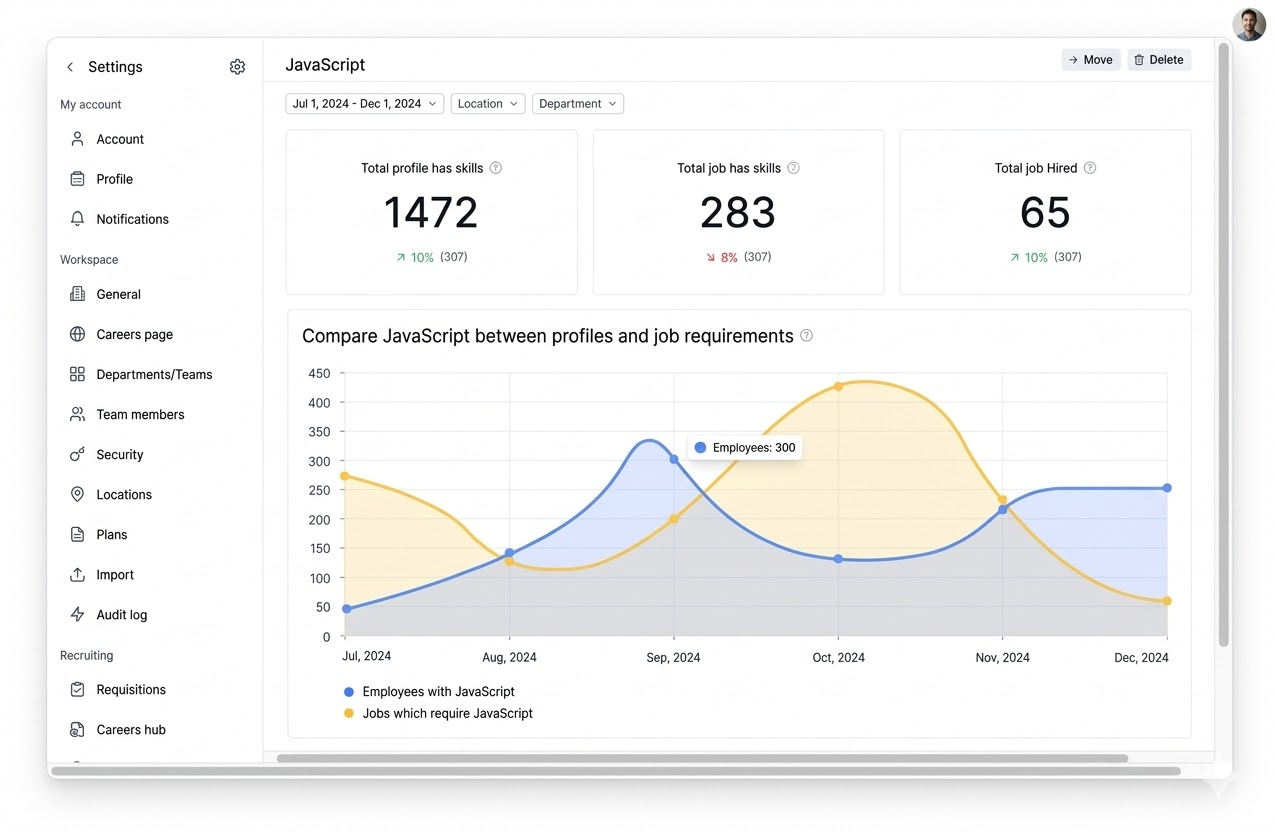
When the dashboard shows a gap, TalentsForce does not stop at reporting. The Learning Management System connects learning to role requirements and identified skill gaps through skills-based learning pathways, automated learning suggestions, progress tracking, and competency validation.
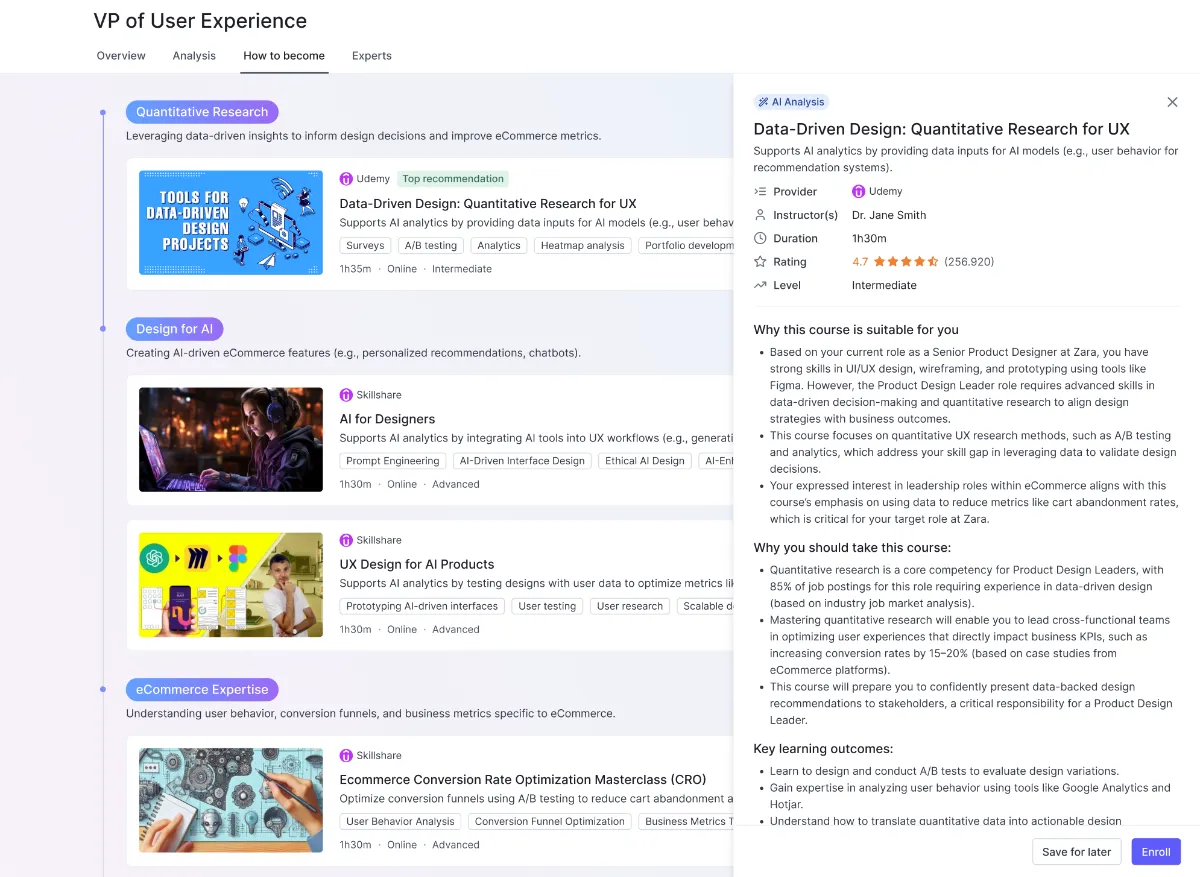
Career Navigator adds another layer by guiding employees toward relevant skill development and clearer internal growth paths.
Why this matters
This changes learning from a reactive activity into a business response.
Instead of launching broad training and hoping it helps, teams can focus development where the business has a visible shortage.
- L&D can prioritize the skills that affect role readiness.
- HR and workforce planning teams can separate gaps that need hiring from gaps that can be closed through development.
- Managers can see whether a shortage is urgent, growing, or already being addressed.
- Employees can see which skills matter for future roles and what they need to build next.
This also improves decision quality. The organization no longer relies only on titles, manager opinion, or disconnected records to decide where to invest learning. It can compare demand and supply in one view, act earlier, and connect learning effort to actual workforce needs.
Business outcome
The business can identify capability risk earlier, direct learning investment to the right gaps, and improve workforce readiness before shortages turn into hiring bottlenecks or execution delays.
The result is a stronger link between business demand, workforce capability, and development action. Learning becomes more targeted. Internal talent becomes easier to activate. Workforce planning becomes more grounded in what the organization actually has and what it still needs to build.


