

Why employer branding channels selection matter
The goal is not to be everywhere, but to choose the channels that match your hiring goals, target talent, and resources.
Most companies starting employer branding feel overwhelmed by options. LinkedIn, Facebook, Instagram, TikTok, career sites, employee advocacy programs, review sites, content marketing, events, awards...
The wrong question: "Which channel is best?"
The right question: "Which channels fit our goals and resources?"
Each employer branding channel serves different purposes. Understanding what each does well helps you allocate resources effectively instead of spreading yourself thin.
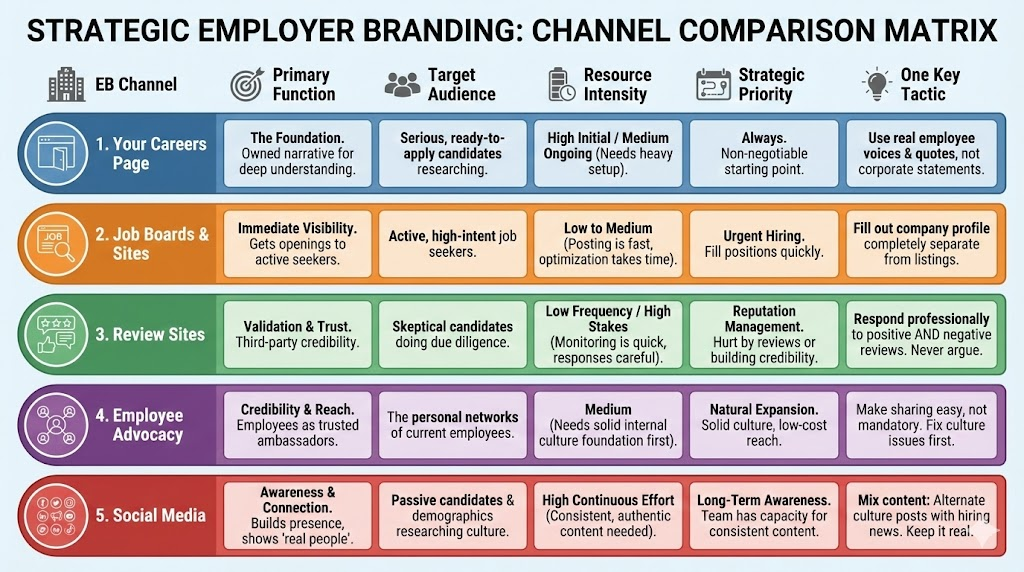
Careers page as a core employer branding channel
What it does: Your foundation. Where candidates understand your company as an employer and find opportunities.
Why it matters: Often, it is the first serious touchpoint when someone considers applying. You control everything here.
Practical tactics:
Go beyond job listings. Show values, culture, and vision through real images from your office, team, and activities.
Use actual employee voices. Short quotes from current employees carry more weight than company statements.
Make applying simple. Easy forms, fast loading pages, clear next steps. Comyplicated processes lose quality candidates.
Be transparent about benefits. Not just salary - show growth opportunities, work environment, and support policies.
Prioritize this when: You're just starting employer branding. A solid careers page is the foundation for everything else.
 TalentsForce
Job boards as employer branding channels
What it does: Gets your openings in front of active job seekers where they're already searching.
Why it matters: Job boards remain one of the highest-traffic sources for candidates. LinkedIn, Indeed, Glassdoor, and niche industry boards reach people actively looking.
Practical tactics:
Optimize your company profile. Most job boards let you create a company page separate from job listings. Fill this out with logo, description, culture information, and employee reviews.
Write job descriptions that reflect the culture. Explain what the person will actually do, who they'll work with, and why it matters. Skip corporate template language.
Use employer branding features. Premium features on LinkedIn and Indeed let you showcase employee testimonials, workplace photos, and videos directly in job postings.
Target the right boards. General boards cast wide nets. Niche boards (Stack Overflow for developers, Behance for designers) reach specialized talent with less competition.
Track which boards convert. Monitor not just applications, but also which boards produce candidates who make it through interviews and accept offers.
Prioritize this when: You need to fill positions quickly and want a broad reach. Job boards work best for active hiring, less for long-term brand building.
Social media as an employer branding channel
What it does: Builds regular presence, interacts with community, shows company culture naturally.
Why it matters: Candidates research companies on social media before applying. This is where they sense the real people behind the brand.
Practical tactics:
Pick the right platforms. LinkedIn works for senior professional roles. Facebook reaches diverse positions and community connections. TikTok and Instagram attract younger creative talent. Focus on where your target audience spends time.
Mix your content. Alternate between culture posts (team activities, workspace photos), hiring announcements, and employee growth stories. Constant job postings make your page boring.
Keep it real. Post natural moments without over-editing. Actual employees working, meetings happening, and small challenges the team overcame.
Make it two-way. Reply to comments, ask questions, create polls. Social media is a conversation, not a broadcast.
Prioritize this when: You need to increase brand awareness quickly and have team capacity to maintain consistent content (minimum 2-3 times per week).
Employee advocacy as an employer branding channel
What it does: Turns current employees into natural ambassadors for your company.
Why it matters: Referrals from employees carry the highest credibility. Candidates trust what employees say more than company marketing.
Practical tactics:
Build something worth talking about first. Employees must genuinely be satisfied with their work. No tactic replaces good culture.
Make sharing easy, not mandatory. Create moments worth sharing and make it simple for employees to post if they want to.
Run referral programs. Set up a system with clear incentives. Employees only refer friends when they believe it's a good opportunity.
Feature employees. Showcase employees on company channels so they feel valued. This also shows candidates that the company invests in people.
Prioritize this when: You have a solid culture foundation and want to expand reach naturally at low cost.
Review sites as trust-building employer branding channels
What it does: Where candidates read honest reviews from current and former employees.
Why it matters: 86% of candidates check company reviews before deciding to apply. You can't fully control this channel, but you can influence it.
Practical tactics:
Monitor regularly. Check Glassdoor, Indeed, and similar platforms weekly. Know what people are saying.
Respond professionally. Reply to positive and negative reviews politely and constructively. For negative reviews, thank them for their feedback and share the improvements being made. Never argue or deny.
Encourage honest reviews. Gently ask satisfied employees to leave reviews. Never tell them what to write or only write positive things - that backfires.
Actually improve. Use feedback to fix real issues. If multiple people complain about work-life balance, change policies, not just PR.
Prioritize this when: Negative reviews are hurting your hiring, or when you want to build credibility through third-party positive feedback.
How to choose your employer branding channels
No universal formula works for every company. Consider these factors:
Resources: How much time and people can you dedicate? Better to do 2-3 channels well than 6-7 poorly.
Target audience: Where do your candidates look for information? Developers might be active on LinkedIn and GitHub. Gen Z might prefer TikTok and Instagram.
Current goals: Need to hire urgently? Prioritize job boards and social media. Building long-term credibility? Focus on employee advocacy and review management.
Budget: Some channels, like employee advocacy, cost less but need time.
Culture reality: If internal culture has issues, fix those before investing heavily in external channels. Unhappy employees will quickly contradict any positive messages you broadcast.
Stop chasing every employer branding channel
Effective employer branding doesn't come from being everywhere. It comes from choosing the right channels for your company and maintaining consistency over time.
Start with the core foundation (careers page or job boards for immediate hiring needs), then expand gradually based on results and feedback.
Most important: ensure every channel authentically reflects your culture and values.
Pick channels that match your actual capacity. Commit to doing them well. Measure what's working. Adjust based on what you learn.
Employer branding channels FAQs
What are employer branding channels?
Employer branding channels are the touchpoints where candidates see and evaluate your company as an employer. Common channels include your careers page, job boards, social media, employee advocacy, and review sites
Which employer branding channels are most important?
For most companies, the careers page is the core employer branding channel, supported by job boards for reach, social media for ongoing presence, and review sites for credibility. Employee advocacy amplifies all of them when your internal culture is strong.
How many employer branding channels should we use?
It is better to run 2–3 employer branding channels well than 6–7 poorly. Start with a strong careers page and 1–2 supporting channels that your target candidates already use, then expand based on results.
How do we choose the right employer branding channels?
Align your channel mix with resources, target audience, hiring urgency, and culture. If you need fast hires, prioritize job boards and social media. If you are building long-term reputation, invest more in your careers page, review sites, and employee advocacy.


