

Solving hiring pipeline chaos
Recruiting teams face the same challenges: too many applications, disconnected tools, manual coordination, and limited time for actual candidate engagement.
The problem isn't workflow complexity alone. Traditional ATS systems track candidates but don't build workforce intelligence. Hiring stays disconnected from skills visibility and workforce planning.
TalentsForce addresses this through four integrated capabilities:
| Capability | Problem Solved | Outcome |
|---|---|---|
| Gen AI Tools | Manual CV parsing and screening | Faster evaluation, consistent data extraction |
| Interview Management | Scheduling back-and-forth | Reduced coordination time, better candidate experience |
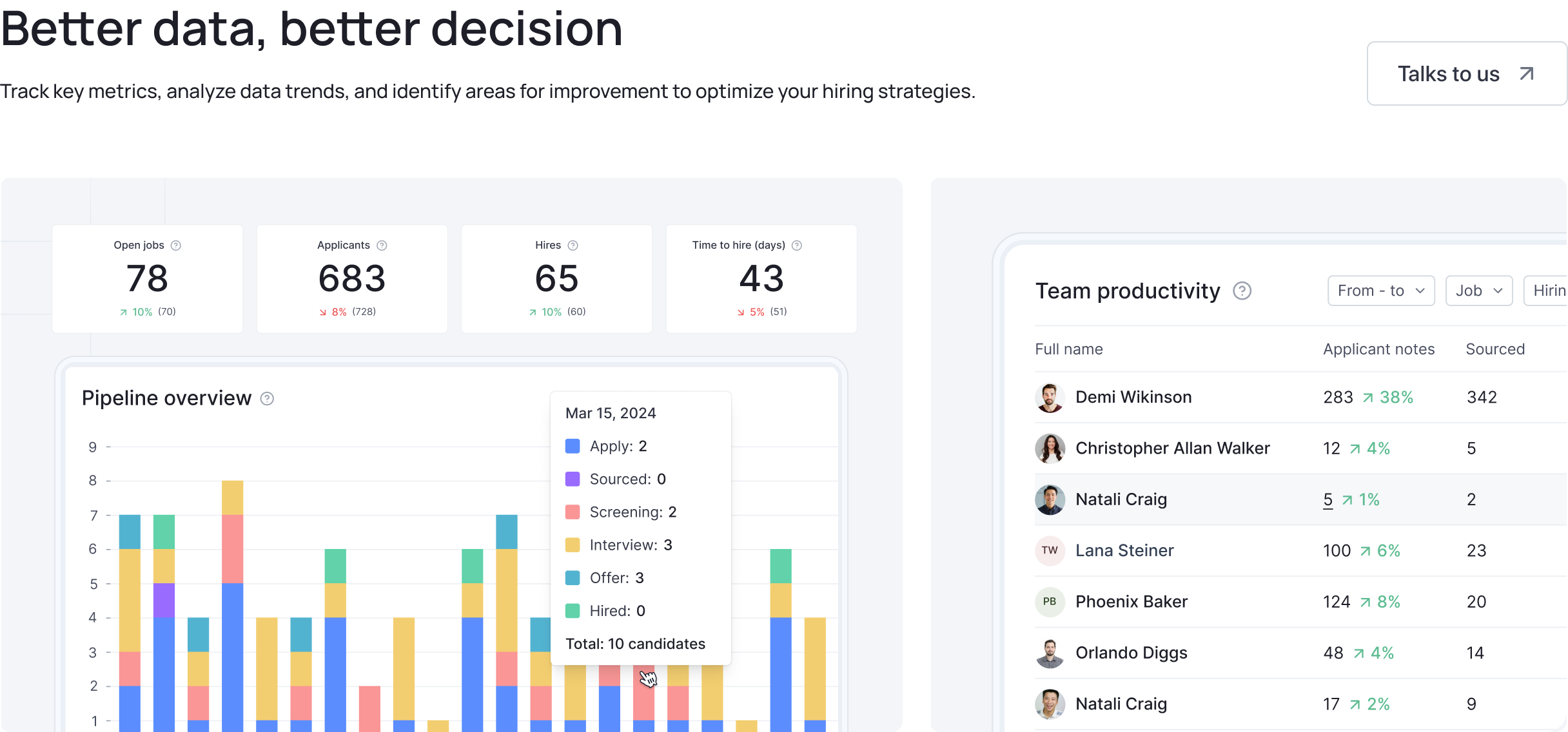
| Report & Analytics | Scattered data, delayed insights | Real-time visibility, data-driven decisions |
| Universal Search & Task Management | System navigation, missed follow-ups | Faster information access, organized workflow |
Why Pipeline Chaos Matters Beyond Recruiting
Hiring inefficiency creates business-wide impact:
- Slower hiring velocity: Coordination delays keep roles vacant longer, affecting team productivity.
- Lost candidates: Slow response times push top talent toward faster-moving competitors.
- Disconnected decisions: Without skills data, external hiring doesn't connect to internal workforce needs.
1. Gen AI Tools
Problem: Recruiters spend hours on CV parsing, information extraction, and job description writing. High application volumes create evaluation backlogs.
Solution: TalentsForce Gen AI parses CVs in multiple formats, extracts relevant information with context, and generates job descriptions automatically.
Result: Faster screening. Consistent data quality. More time for candidate engagement and strategic evaluation.

2. Interview Management
Problem: Email coordination with hiring managers consumes hours. Calendar conflicts delay interviews. Candidates lose interest during long scheduling cycles.
Solution: Self-scheduling allows candidates to select interview times based on team availability. Coordination happens within the platform.
Result: Interviews confirmed in minutes, not days. Better candidate experience. Recruiter time returned to higher-value work.
3. Report & Analytics Dashboard
Problem: Recruiting data exists across disconnected systems. Compiling insights requires manual work. Decisions happen before data is available.
Solution: Centralized dashboard shows pipeline velocity, bottlenecks, source effectiveness, and hiring patterns in real-time.
Result: Immediate visibility into process issues. Measurable recruiting effectiveness. Data-driven resource allocation.
4. Universal Search & Task Management
Problem: Recruiters navigate multiple systems to find candidate information, job details, and task status. Context switching reduces productivity.
Solution: Universal Search accesses jobs, candidates, and companies from one search bar. Task Management centralizes interviews, pending tasks, and team activity.
Result: Faster information access. Fewer missed tasks. Lower cognitive load for daily operations.
From Workflow to Intelligence
Operational efficiency solves immediate bottlenecks. But the larger opportunity is connecting hiring to workforce strategy.
TalentsForce integrates these operational tools with skills intelligence: Skill Inventory, Position Management, and Career Navigator AI. External hiring connects to internal capability data.
This means recruiting decisions consider not just immediate role fit, but how new talent addresses organizational skill gaps and supports workforce development goals.
Efficient hiring is the foundation. Skills-based workforce intelligence is the competitive advantage


