Screening takes 20-30% longer now because AI CV tools create three patterns in every CV pile. Here's how to identify each pattern during initial resume review before you ever call a candidate.
What to look for during CV screening
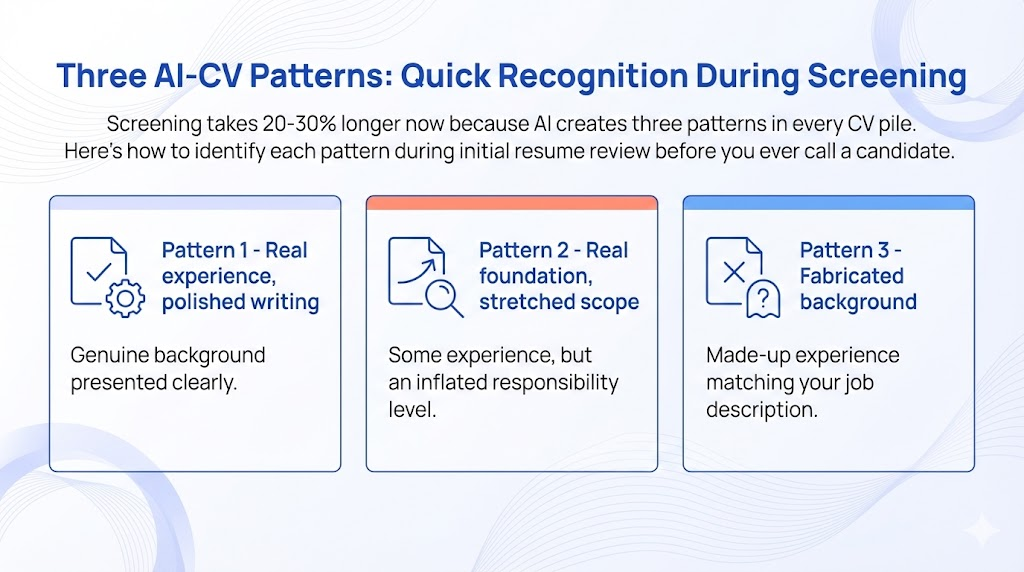
AI CV pattern 1: Real experience, polished writing
CV characteristics:
- Specific achievements with clear metrics ("Reduced processing time from 6 hours to 2 hours")
- Consistent progression through roles
- Details match industry standards (realistic team sizes, budgets, timelines)
- Technical terms used correctly in context
- Company names and roles are verifiable
Quick verification check:
- LinkedIn profile shows the same companies, similar dates
- Company size matches the claimed responsibility scope
- Job titles align with stated achievements
Screening time: 2-3 minutes
Next step: Advance to phone screen
AI CV pattern 2: Real foundation, stretched scope
CV characteristics:
- Vague achievement descriptions ("Led strategic initiatives," "Drove organizational change")
- Responsibility level doesn't match job title ("Associate" claiming VP-level decisions)
- Metrics without context ("Increased revenue 40%" but no baseline numbers)
- Claims ownership of obvious team efforts ("Single-handedly transformed department")
- Timeline inconsistencies (junior role one year, expert level the next)
Red flags in language:
- Overuse of "spearheaded," "drove," "led" for every bullet point
- Claims both strategic and tactical ownership of everything
- Every project shows exceptional results with no setbacks
Quick verification check:
- LinkedIn shows different, less senior job titles
- Company size too small/large for claimed scope
- Google search shows others claiming the same major achievements
Screening time: 3-5 minutes
Next step: Phone screen with specific scope-verification questions ready
AI CV pattern 3: Fabricated background
This is the riskiest AI CV pattern, where experience is largely made up to match your job description.
CV characteristics:
- Perfect keyword match to your exact job description
- Generic achievement descriptions that could apply to any company
- Inconsistent details (dates don't align, company info is incorrect)
- Unrealistic progression (multiple career changes across unrelated fields, each claiming expertise)
- Claims expertise in incompatible skill sets ("Expert in both iOS and Android native development, machine learning, and blockchain" for 2 years of experience)
Major red flags:
- Job titles that don't exist in that industry
- Claimed degree programs that the university doesn't offer
- Technical skills listed that contradict each other
- Claimed certifications do not exist when searched
Screening time: 5-7 minutes
Next step: Consider communicating with candidates on the issue, verifying and making honest feedback on your discovery.
A structural solution for AI CV screening
Consider adding one screening question to your application form: "Describe a specific challenge you faced in [relevant role type]. What was your approach, and what would you do differently?"
Responses reveal patterns before you review CVs. Pattern 1 gives specific, detailed answers showing real experience. Pattern 2 provides somewhat generic responses but shows foundation. Pattern 3 offers theoretical, textbook answers. You identify the pattern in 3 minutes before spending time on CV verification.
AI CV screening FAQs
What is an AI CV pattern?
An AI CV pattern is a recurring style of resume that appears when candidates use AI tools to generate or polish their CVs. In screening, these often fall into three groups: real experience with strong writing, real but stretched scope, and fabricated backgrounds.
How does AI CV affect resume screening time?
AI CV tools make many resumes look similar and keyword optimized, which means recruiters must spend more time checking details, verifying scope, and spotting inconsistencies. This increases screening time by forcing deeper verification.
How can recruiters quickly spot risky AI CVs?
Recruiters can watch for vague achievements, inflated responsibility levels, perfect keyword matches to the job description, unrealistic career jumps, and non-existent degree programs or certifications. These signals often point to stretched or fabricated AI CVs.
How can screening questions help with AI CVs?
Adding one targeted screening question, such as asking candidates to describe a specific challenge and how they handled it, reveals whether they can talk credibly about real experience. Strong answers usually align with pattern 1, while generic or textbook responses signal patterns 2 or 3.