

If you work in recruitment, you know this situation: you interview a promising candidate, tell them you will be in touch soon, then days turn into weeks without any update from your side. The candidate sends a follow-up email. Then another. Eventually, they stop trying.
This is ghosting, and it is damaging your employer brand more than you realize.
Recent data shows that 61% of job seekers have been ghosted after an interview (1). For candidates, this silence creates anxiety, wastes significant time, and shapes how they view your organization long after the hiring process ends.
Why ghosting candidates happens
Ghosting candidates is not usually about bad intent. It happens when systems break down under pressure.
For recruiters, the workload has increased significantly. Industry data shows recruiter workload jumped 20% in 2025 (2). At the same time, AI-powered application tools have enabled mass applying, with 38% of job seekers now submitting applications to dozens of roles.
This creates overwhelming volume. You face hundreds of applications, dozens of active candidates across multiple roles, and limited hours in the day. When you cannot respond to every applicant, communication gaps become inevitable.
The problem is that silence sends a message too. When candidates do not hear back, they assume rejection, lose trust in your organization, and share their experience with others. What feels like a necessary triage decision on your end becomes a damaging employer brand issue on theirs.
How ghosting candidates impacts your work
When you ghost candidates, the impact extends far beyond that individual hire.
For your employer brand, it creates lasting damage. Candidates who feel ignored are significantly less likely to recommend your company or apply again in the future. Nearly half of candidates say they would avoid engaging with a company based on frustrating interview experiences (3). These candidates share their experiences on social media, review sites, and with their networks.
For your hiring pipeline, it means lost opportunities. Candidates you ghosted today might be perfect for a role tomorrow. When you burn that bridge through silence, you lose access to qualified talent who have already shown interest in your organization.
For your team, it creates extra work. When candidates drop out because they assume you are not interested, you restart searches and invest time in new sourcing when qualified candidates are already in your pipeline.
5 practical tips to avoid ghosting candidates
1. Set clear expectations to avoid ghosting candidates
Candidates want to know what to expect. Tell them upfront about your hiring timeline, the number of interview rounds, and when they will hear back from you. If your process typically takes six weeks from application to offer, share that information early. This simple step reduces anxiety and prevents candidates from assuming they have been forgotten.
When you need more time than expected, send a brief update. Even a short message acknowledging the delay shows respect for their time and keeps them engaged in the process.
2. Use automation to reduce candidate ghosting
You cannot personally respond to every application, but you can ensure no candidate feels invisible.
TalentsForce's automation features help you maintain consistent communication without adding hours to your day:
Application confirmation emails are sent automatically when a candidate applies, acknowledging receipt and outlining next steps. Candidates immediately know their application reached you, eliminating the anxiety of wondering if it disappeared into a void.
Automated reminders keep both you and candidates on track. The system reminds candidates about upcoming interviews and sends you notifications when feedback is due or when tasks need completion. This prevents situations where candidates show up prepared while you forgot the interview was scheduled, or where you meant to follow up but it slipped through the cracks.
Scheduled rejection emails let you send disqualification messages at respectful times. Instead of sending bad news late on a Friday evening or in the middle of the night, you can schedule messages to arrive during business hours when candidates are in a better mindset to receive them.
These automated touchpoints serve a dual purpose. First, they reassure candidates that their application was received, and second, they free you to focus on meaningful conversations with qualified candidates rather than administrative follow-up.
3. Organize your day so no candidate feels ghosted
When you juggle multiple open positions and dozens of candidates, it is easy to lose track of who needs a response.
A clear visual system helps you see your workload at a glance and prioritize follow-ups. TalentsForce's Task Management organizes your daily recruiting activities, including upcoming interviews, pending tasks, and feedback requests.


- Clear view of your tasks
- What events happen next
- Your current jobs
- Update on the progress
4. Close the loop, even with rejections
Many recruiters avoid sending rejection messages because they worry about uncomfortable conversations or simply lack time. However, leaving candidates without closure is more damaging than a polite rejection. When you decide not to move forward with a candidate, tell them. A brief, respectful message takes less than a minute and preserves goodwill.
Consider creating email templates for common rejection scenarios. This allows you to send personalized but efficient messages that acknowledge the candidate's effort while providing closure.
Candidates consistently report that receiving any response, even a negative one, is better than being left to wonder.
5. Track your pipeline for bottleneck
The Report & Analytics dashboard provides a visual overview of your recruiting pipeline, helping you identify candidates who may have been waiting too long for a response.
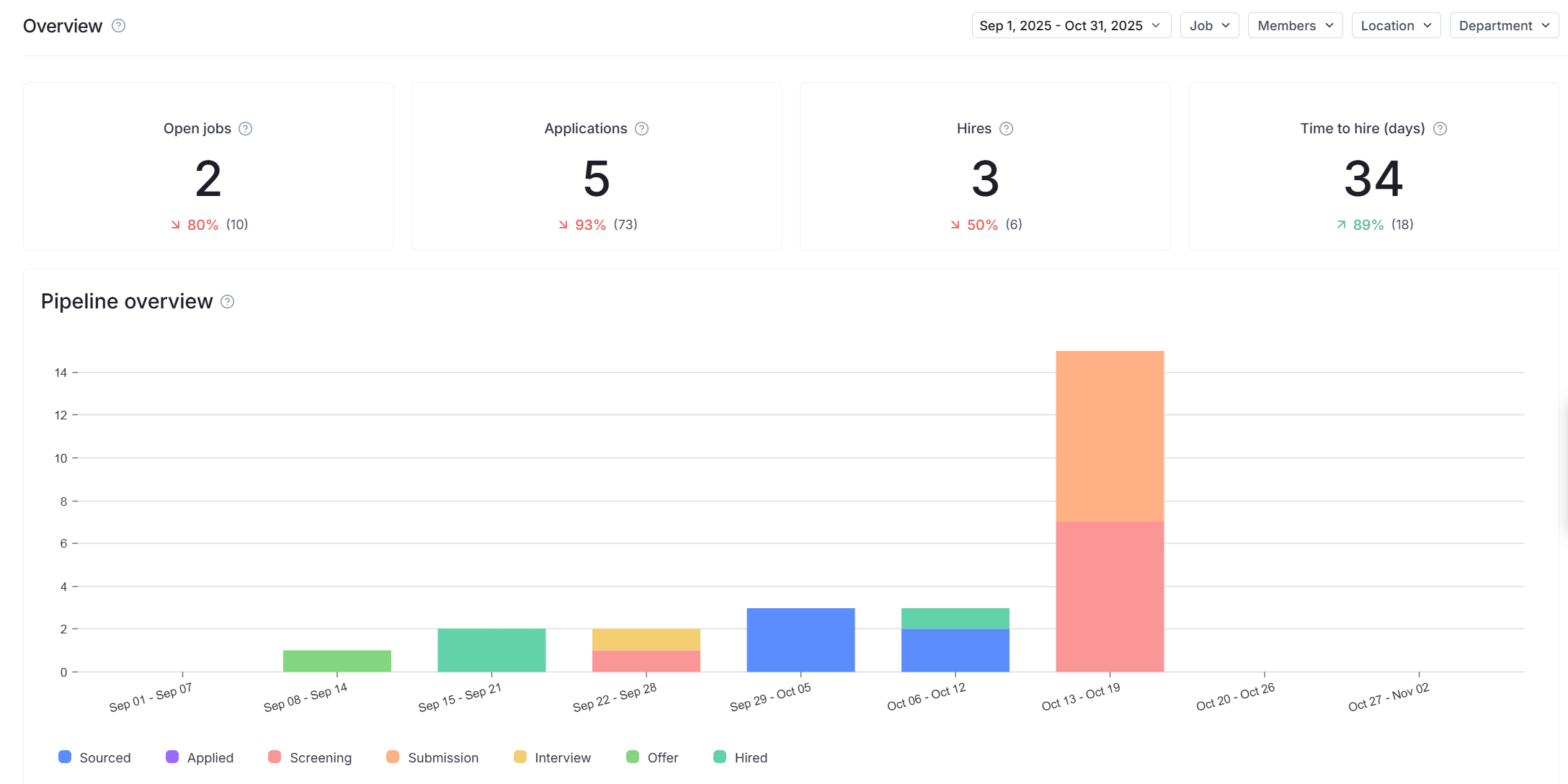
This visibility prevents situations where candidates wait weeks for feedback simply because their status was unclear or buried in your inbox.
Moving forward
Ghosting will likely remain part of recruitment as long as both sides face high volume and limited time. However, the tips above can significantly reduce how often it happens. The key is consistent, respectful communication that keeps candidates informed at every stage.
When you treat candidates the way you want to be treated in your own job searches, you build trust that extends beyond a single hiring process. Candidates who feel respected and informed become advocates for your employer brand, even if they do not get the job.
Contact TalentsForce team to learn how we make it easy to keep candidates engaged throughout the hiring process.
Sources:
- Greenhouse 2024 State of Job Hunting report
- TalentsForce internal data
- Research from Criteria Corp
- Research from Lighthouse Research & Advisory


